Their decade, not the textbook’s
The 1960s in a textbook and the 1960s your grandparent lived through are different decades. Theirs had a particular kitchen, a first car, a song they still know every word of, and news they heard on a radio or a black-and-white TV.
Ask about their own days first. The big events come up naturally once they are back in the room where they heard them. Many grandparents were teenagers or young parents then, so the same year can mean a dance hall or a nursery.
Before you sit down
- Find out how old they were in 1960 and in 1969. It changes every question.
- Play a song from the year they turned eighteen and ask where they were the first time they heard it.
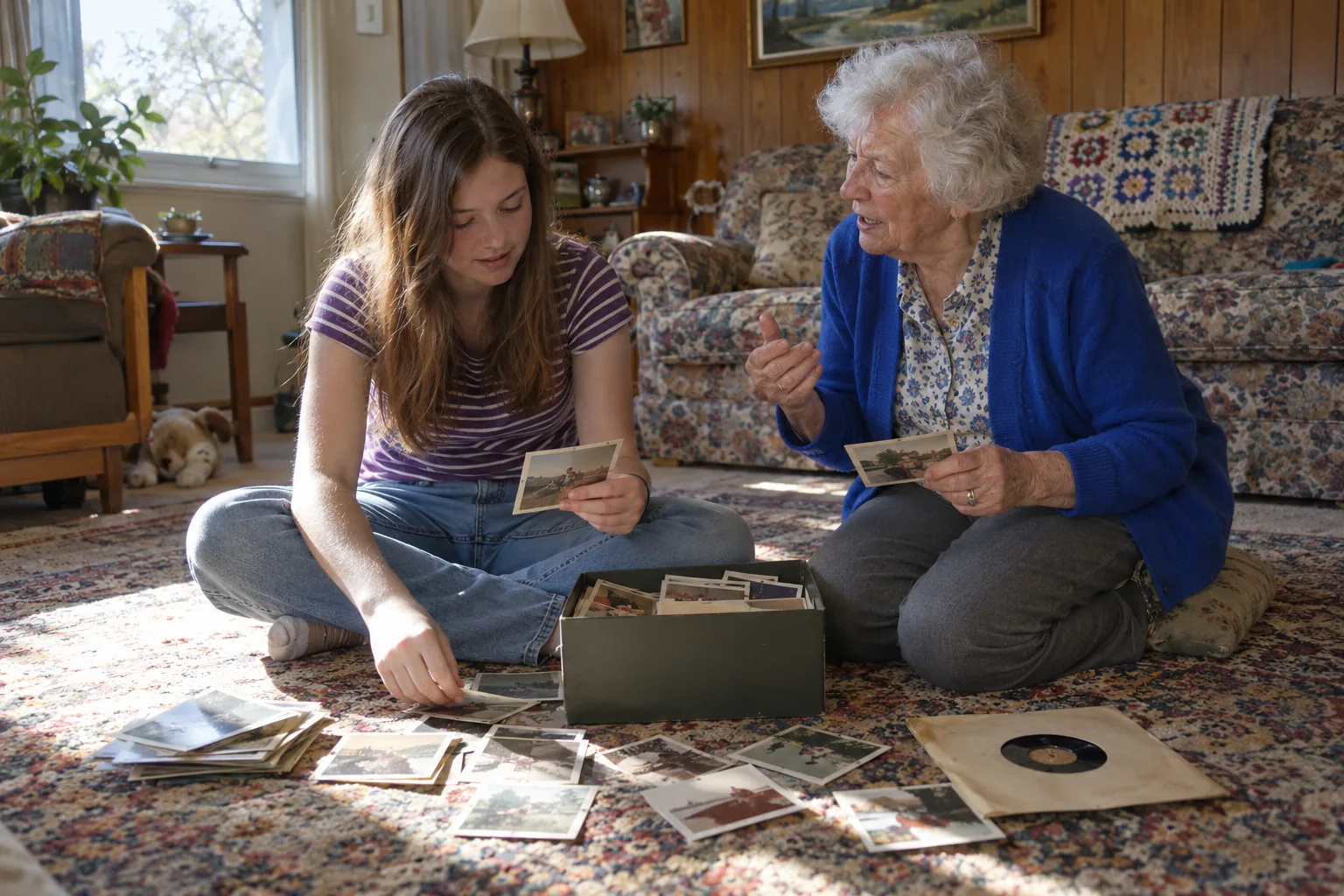
- Bring snapshots from the decade. The square ones with the white border are perfect.
- Let them disagree with how the decade is remembered. That is often the best part.
Everyday life
- Where were you living, and who lived with you?
- What did a normal Saturday look like?
- What did things cost? A movie, a soda, a tank of gas?
- What did your family eat on a weeknight?
- Who had the first TV on your street?
Music, clothes and fun
- What song takes you straight back to that time?
- What did you wear on a night out? Did your parents approve?
- Where did people your age go on a Friday night?
- What was the first record you bought with your own money?
- Did you have a car? Tell me about it.
The news
- Where were you when you heard President Kennedy had been shot?
- Did you watch the moon landing? Who were you with?
- What did people around you think about the war in Vietnam?
- What did you see of the civil rights movement where you lived?
- Was there a change in those years you were glad about? One you weren’t?
Looking back
- What do people get wrong about the sixties?
- What did you believe then that you later changed your mind about?
- What from that time do you wish had stayed?
Small answers add up. A grandparent who remembers the price of a milkshake usually remembers who they drank it with.
When you want those conversations kept, Fablr can hold them by voice, ask what happened next, and pick up the thread at the next visit. You might also like these questions about how your grandparents met.