Where the stories hide
Maybe it is a photo in uniform on the hallway wall, or a folded flag in a closet nobody opens. Plenty of grandparents who served said very little about it to their own children. Grandchildren often hear more, because they ask later and more lightly.
Service stories rarely come out in order. They come out through a nickname, a meal, a song on the barracks radio. Start there. Ask about people before events, and treat a long pause as part of the answer.
Before you sit down
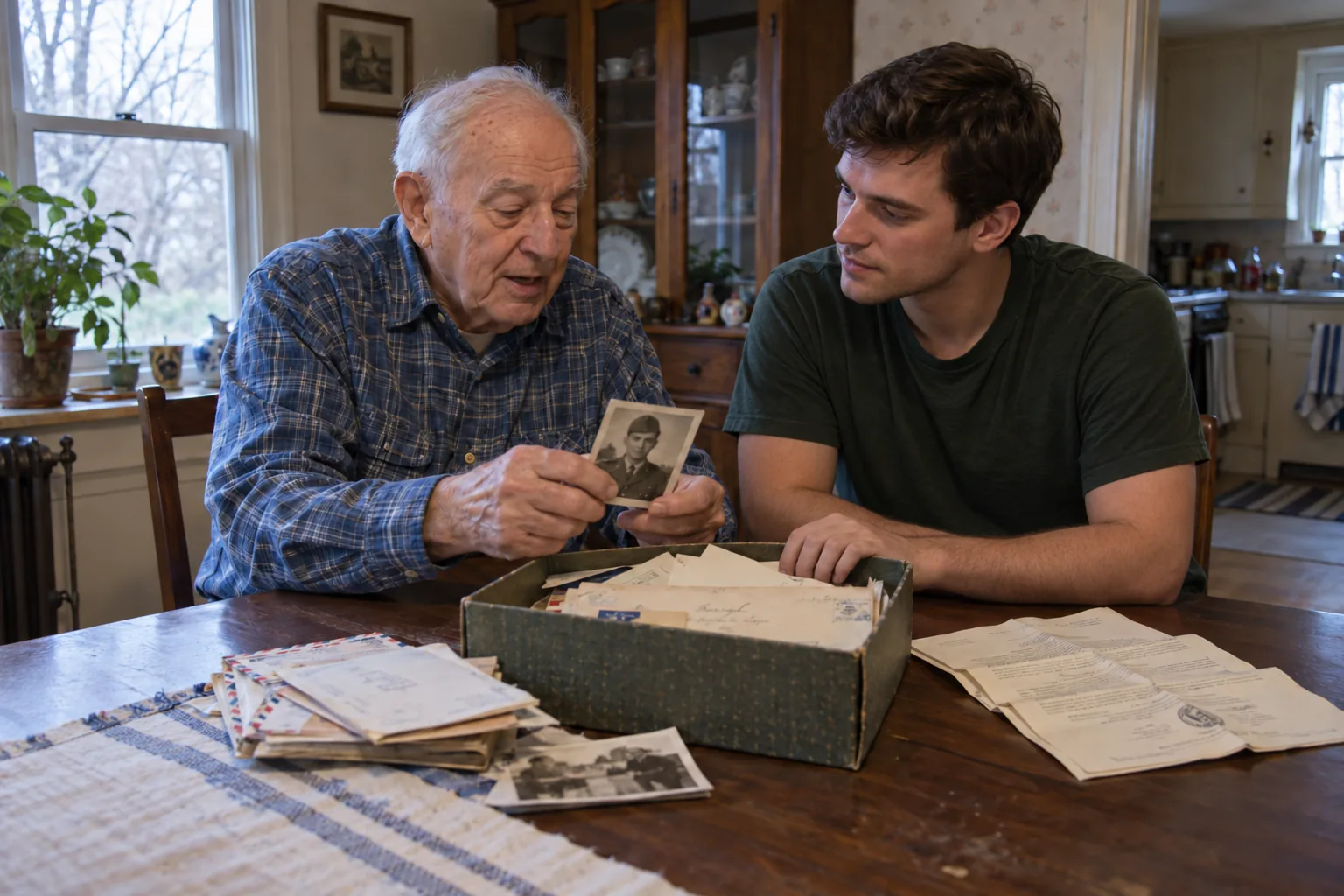
- Bring something to hold: a photo, a patch, a discharge paper, a letter.
- Pick three or four questions for a first visit. Save the rest for next time.
- Ask about combat once, gently, and move on if the answer is short.
- Write down every name they mention. Names open the next conversation.
Joining up
- How old were you when you went in, and how did it come about?
- Were you drafted, or did you sign up? Where were you when you found out?
- What did your mother say when you told her?
- What do you remember about the day you left home?
- What was the hardest part of basic training? What surprised you?
The people
- Who was your closest friend while you served? What were they like?
- Did you have a nickname? Who gave it to you?
- Who was the funniest person in your unit?
- Was there someone in charge you would have followed anywhere? Why?
- Who did you stay in touch with after you got out?
Daily life
- Where were you stationed? What did it look like, and what did it smell like?
- Walk me through an ordinary day, from waking up to lights out.
- What did you eat? Was there one meal you looked forward to?
- What did you do on a day off?
- How did news from home reach you, and who wrote most often?
- What did you miss most?
Coming home
- What was the first thing you did when you got back?
- Was it hard to go back to ordinary life? What helped?
- What do you think people back home never understood about it?
- How did serving change the way you saw things?
- What would you want your great-grandchildren to know about that time?
Some veterans will never talk about the worst of it, and they don’t need to. A story about Eddie from Ohio, or the best meal of a hard year, is worth keeping on its own.
If you would rather not run the interview yourself, Fablr can hold these conversations by voice, follow up the same way, and keep what they say for the family. You might also like these questions to ask grandparents for life advice.