 Start a Fablr memoir
How to preserve your family's stories before they're lost.
Most family memories are never written down — they live in one person's head until they fade. This guide walks through five proven ways to capture a parent or grandparent's life story, what each one really costs in time and money, and how to choose the method they'll actually finish.
Updated June 2026 · A biographer that remembers
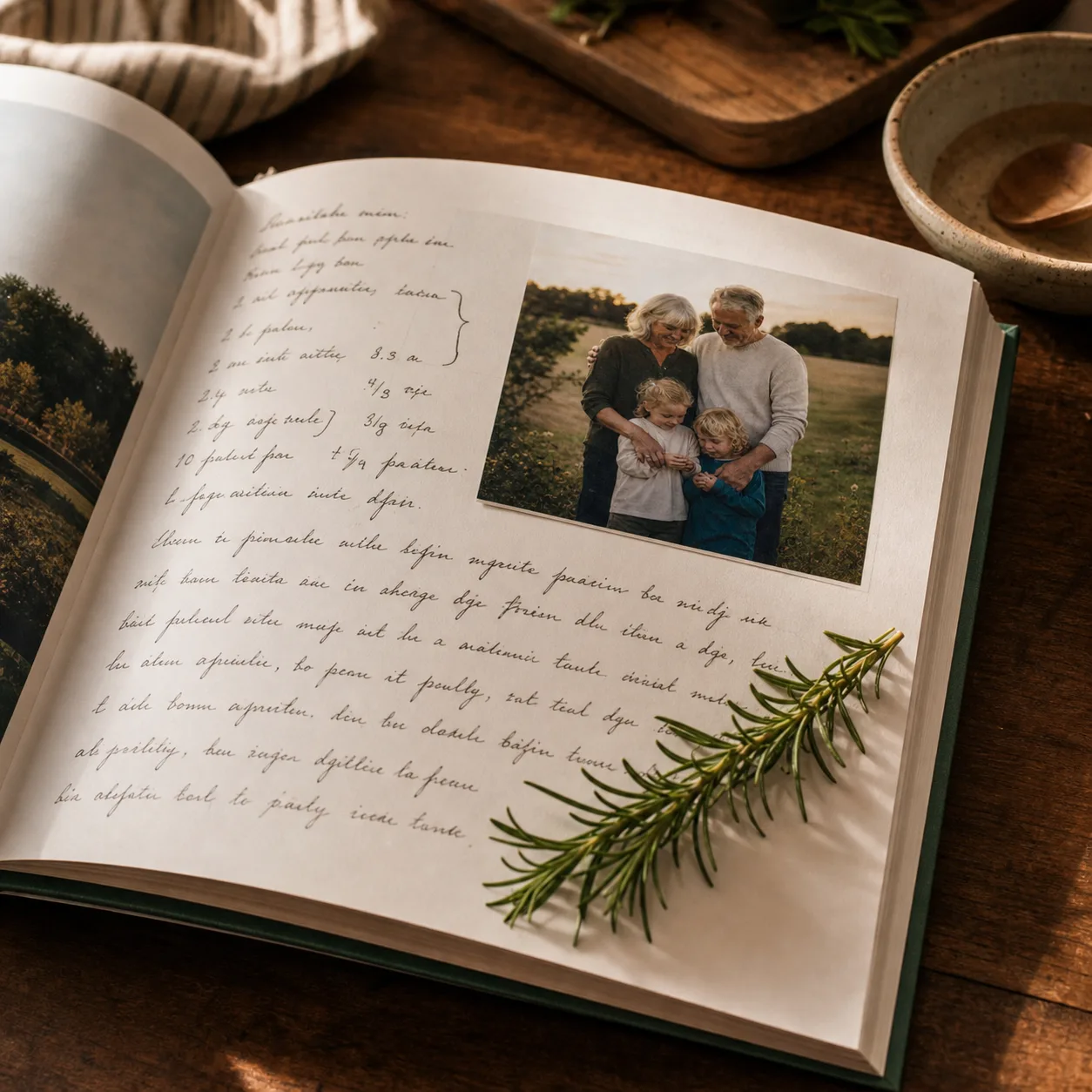
Quick answer
The best way to preserve family stories is to record the storyteller's voice in a guided interview, then transcribe and organize the recordings into written chapters kept in a durable format like a printed book. Doing it yourself works but is time-consuming: you record, transcribe, edit, and lay out the book by hand. Voice-first services such as Fablr automate the hard parts — a voice biographer interviews your loved one on a phone, tablet, or computer, asks follow-up questions, and turns the conversation into a written, full-color hardcover memoir, remembering each visit for the next. Start sooner rather than later: the stories you capture this year are the ones you keep.
- Record the voice first — audio captures detail and personality that written notes miss.
- Ask open follow-up questions; the best stories come after "tell me more about that."
- Transcribe and organize by life stage so the stories read as a narrative, not a pile of clips.
- Save it in a durable format — a printed hardcover outlasts any app, file, or subscription.
- Doing it manually is free but slow; a voice biographer like Fablr does the recording, writing, and layout for you.
The stories disappear faster than the photographs.
A shoebox of photos can sit untouched for decades and still be there when you finally open it. The stories behind those photos — who that is, what they were like, the day it was taken — only exist in someone's memory. When that person is gone, so are the stories.
You don't need a fear-driven deadline to act on this. You need a method simple enough that your parent or grandparent will actually enjoy doing it, and durable enough that what they share is still readable in fifty years.
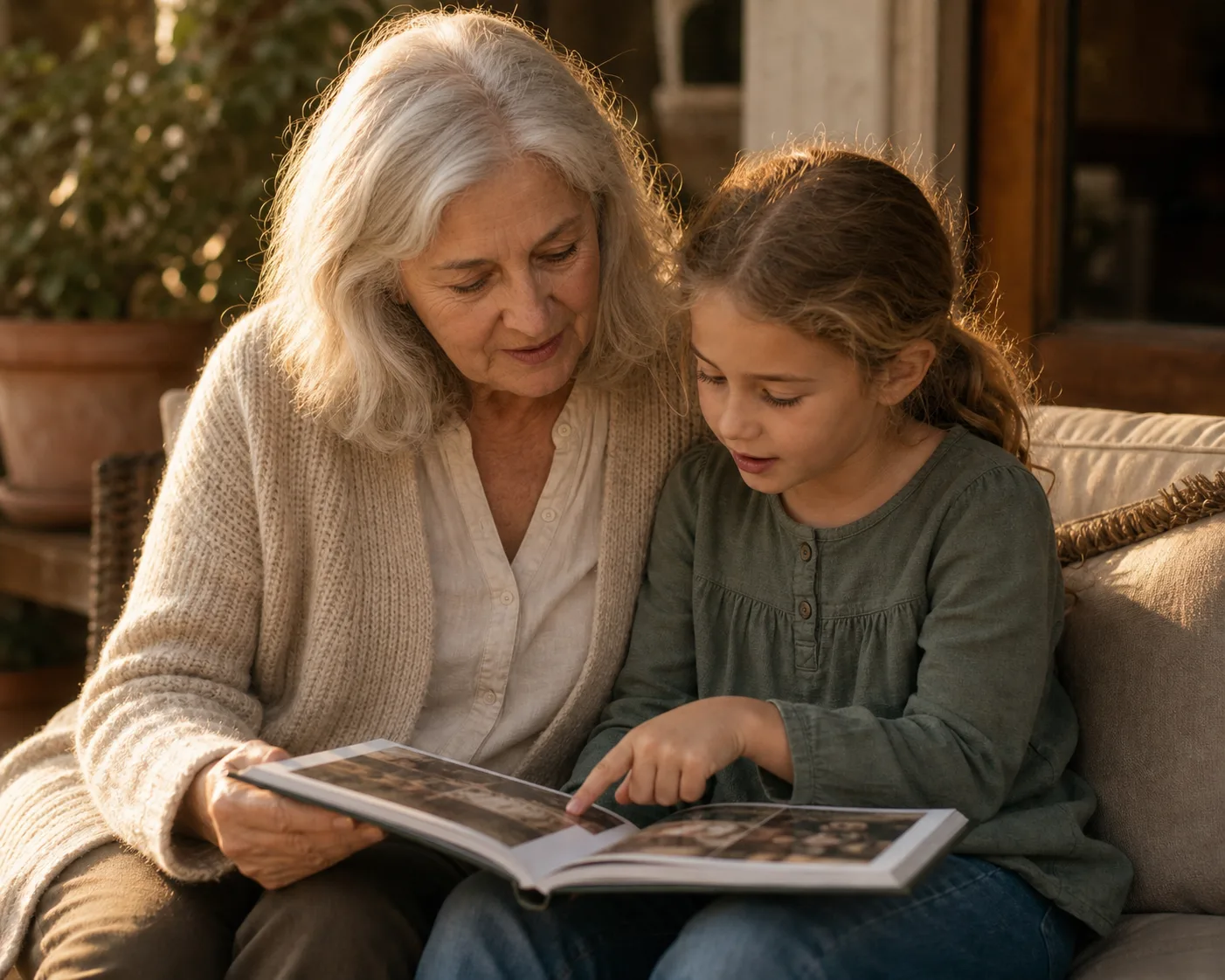
Most DIY memoir projects stall. Pick for completion, not ambition.
Self-recorded interviews, journaling kits, and scrapbooks all work in theory. In practice they ask the storyteller — often someone in their 70s or 80s — to write, type, transcribe, or organize. That friction is why so many of these projects end with a few entries and a blank book.
The methods that finish remove work from the storyteller. With Fablr, your loved one opens a web browser on a phone, tablet, or computer (no download needed), taps one button, and tells the story. The biographer asks the follow-up questions, writes the chapters, and lays out the book.
Choose the method by who does the work. If it relies on the storyteller to type or transcribe, it usually stalls.
Five ways to preserve family stories, compared.
Every method below can produce a keepsake. They differ enormously in how much work they put on the storyteller and the family, and in how durable the result is.
| Method | Effort on storyteller | Typical cost | Keeps their real voice | Finished book |
|---|---|---|---|---|
| Write or type it themselves | High | Free | ||
| Record interviews yourself + transcribe | Medium | Free–low | DIY | |
| Guided journal / prompt kit | High (writing) | $30–$110/yr | ||
| Professional ghostwriter | Low | $6,500–$40,000+ | ||
| Fablr voice biographer | Low (a conversation) | $149 once |
Comparison details are based on each provider's publicly available pages, reviewed June 3, 2026. Product details, pricing, and plan terms can change — check each provider's site for the latest information.
Preserving family history — the easy way.
Start a Fablr memoirQuestions families ask
What's the easiest way to preserve my parents' stories?
How do I record my grandparent's life story?
Is it better to write a memoir or record it?
What's the best format to save family stories in?
Can I preserve my parent's stories without making them manage an account?
Can we include photos, objects, or keepsakes?
How long does it take to preserve a family member's stories?
Is this private?
Their stories stay theirs.
A life story is tender. Fablr is built so a parent or grandparent can share freely, knowing it goes no further than the family they choose.
- Private by default — only the people you invite can ever see the stories.
- Encrypted and backed up daily to a separate provider.
- Never sold, never shown to advertisers, and never used to train AI models.
- You own your stories — they stay yours.
Capture their stories the easy way.
Give your parent or grandparent a year of guided conversations — no typing, no deadlines — and a full-color hardcover memoir in their own voice. One price, paid once.
Start a Fablr memoirLast updated June 5, 2026