
Why Family Stories Matter More Than You Think
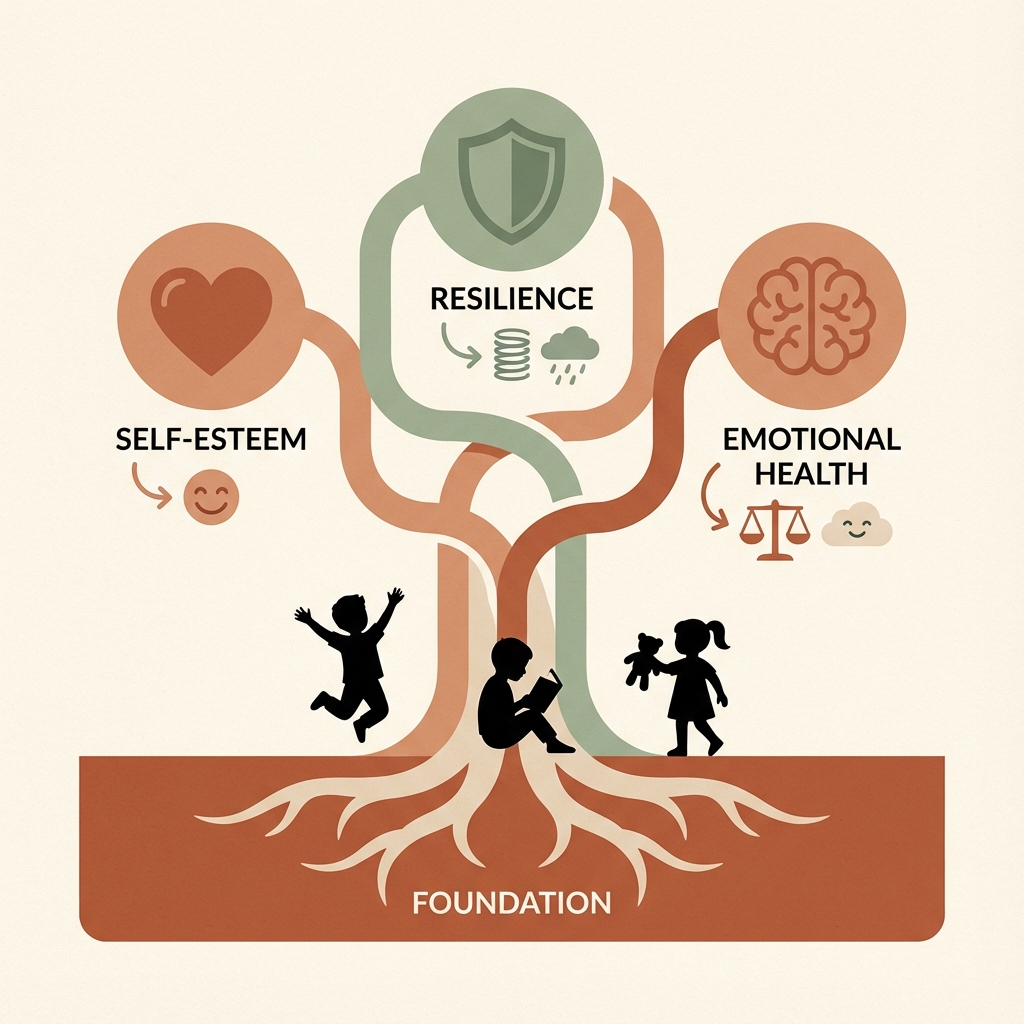
Research proves children who know their family history have higher self-esteem and resilience. Yet 80% of family stories vanish within three generations - here is why preserving them matters.

You've been meaning to ask your dad about his childhood. To record your mom's recipe stories. To understand what really happened during that year your parents don't talk about.
But there's always next weekend, right?
Here's the truth that 74% of Americans learn too late: by the time you realize what you've lost, the stories are already gone.
This isn't about filling out a family tree or organizing old photos. This is about something far more powerful—the stories that shape who your children become, the moments that teach resilience without a single lecture, and the connections that turn "I'm just one person" into "I come from people who endured."
The Science That Changes Everything
Dr. Robyn Fivush didn't expect family stories to matter this much.
As a psychologist at Emory University, she created a simple test called the "Do You Know?" scale—20 questions about family history. Questions like "Do you know where your grandparents grew up?" and "Do you know how your parents met?"
Then she measured the children's well-being.
The results were stunning.
Children who knew more family stories had:
- Higher self-esteem
- Stronger resilience when facing challenges
- Less anxiety and fewer behavioral problems
- A greater sense of control over their lives
- Better social skills and friendship quality
But here's what shocked researchers most: knowing family stories predicted well-being better than the children's own personal memories.
Think about that. The stories your parents and grandparents carry don't just preserve the past—they literally shape your children's emotional future.
Why Mundane Moments Matter Most

Dr. Fivush tells a story about a research participant named Lila. When asked about her favorite family memory, Lila didn't describe a wedding or a graduation. She described a vacation in Italy when her mother, exhausted from sightseeing, plopped down on a sidewalk and declared: "I can't take another step. My feet are screaming bloody murder!"
The family erupted in laughter. They've retold that story hundreds of times since.
To an outsider, it sounds like nothing. But as Lila explained: "It's one of my favorite stories because we tell it all the time, and we always break up laughing hysterically over it. It bonded us together."
This is the "feet screaming bloody murder" principle: the stories that bind families aren't always the dramatic ones.
They emerge "over cutting carrots together, during a commercial break, or in the car on the way to school," as Dr. Fivush discovered.
But someone has to capture these moments. Because once they're gone, they're gone forever.
The Crisis We're Not Talking About

Every day, 10,000 Baby Boomers turn 65 in the United States. With them comes an urgent reality:
- 80% of family stories are lost within three generations
- 1 in 9 people over 65 has Alzheimer's disease
- 67% of seniors will experience some form of cognitive decline by age 70
- 60% of people can't recount a single story about a great-grandparent
Your grandparents' stories? If no one captured them, they're likely already gone.
Your parents' stories? The window is narrowing faster than you think.
Memory doesn't decline gracefully. It doesn't send a warning letter. One day your mom tells vivid stories about her childhood. A few years later, she can't remember her childhood address. Then one day, she doesn't remember that she ever lived there at all.
The "almost too late" moment arrives without announcement. And unlike photos or heirlooms, lost stories can never be recovered.
What Your Parents Gain (And Why They Need This Too)
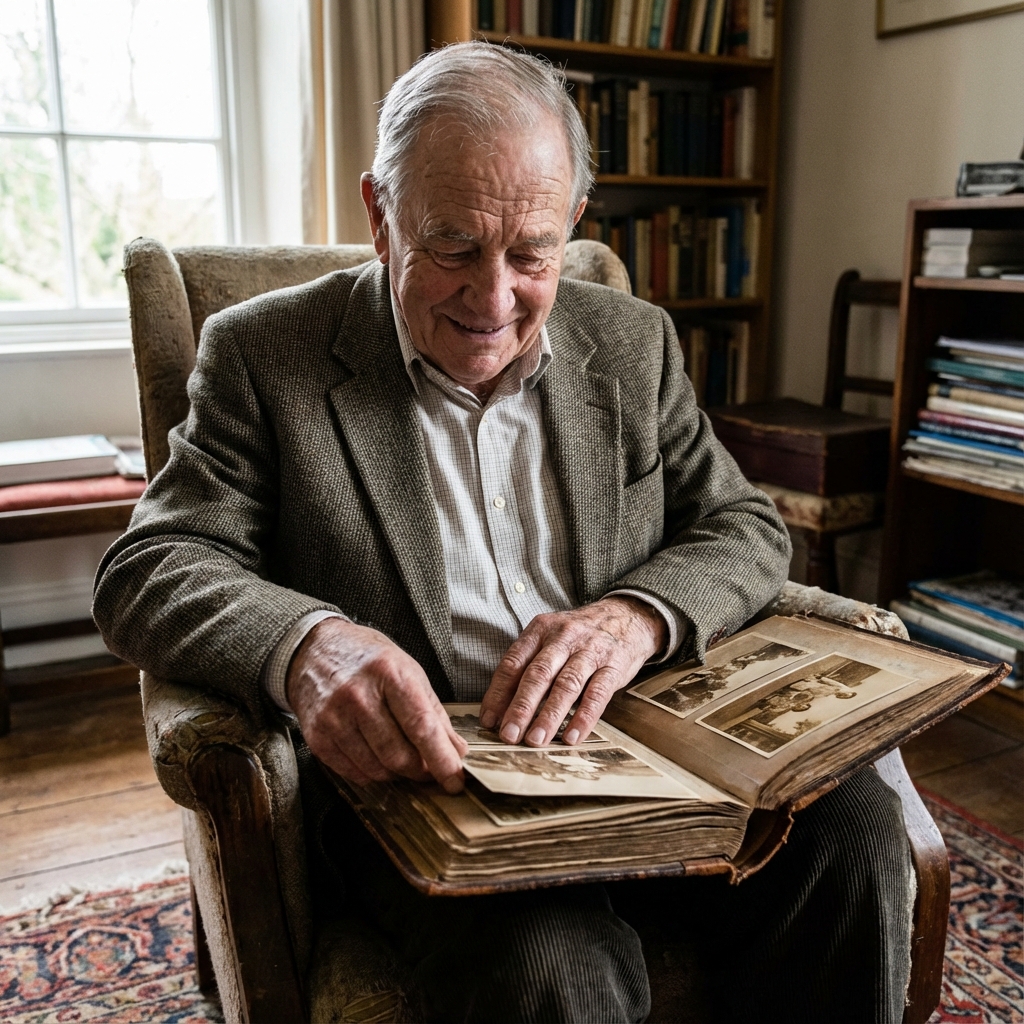
When you ask your parents to share their life story, you're not just doing this for your children. You're giving your parents something profound.
Psychologists call it "generativity"—the deep human need in later life to know that your life mattered, that your lessons won't be lost, that something of you will endure.
Research on life review therapy shows that when older adults share their stories:
- Depression decreases significantly
- Life satisfaction increases across all domains
- Feelings of loneliness diminish
- Sense of purpose is restored
Nearly 1 in 3 seniors report feeling isolated. But when family members ask about their past, something shifts. They're not just an elderly parent who needs help opening jars—they're the young woman who hitchhiked across the country, the man who built a business from nothing, the person who survived and thrived and has wisdom to share.
As one 82-year-old grandmother said after completing her life story: "I didn't realize my ordinary life was so extraordinary until I saw it through my grandchildren's eyes."
The Stories That Haunt You If You Wait
Here's what people say after it's too late:
"I wish I'd asked about her relationship with her own mother. Now I'm struggling with the same dynamics, and I can't ask her."
"I don't know why he changed careers at 40. Now I'm facing that same choice and his wisdom is gone."
"She mentioned a sister who died young, but I never learned what happened. That loss shaped everything about her, and I'll never understand it."
"I don't know if he was proud of me. I'll live the rest of my life wondering."
These aren't small questions. These are the threads that connect you to your past, the wisdom that could guide your future, the context that makes sense of who you are.
And every day, more families join the 74% who regret waiting.
Why Traditional Approaches Fail
For years, preserving family stories meant one thing: writing.
Family history books. Weekly email prompts. Blank journals with questions on each page.
But here's the problem: most people don't identify as writers. The blank page is intimidating. Organizing thoughts into prose feels overwhelming. And for older adults dealing with arthritis, vision problems, or simply decades away from formal writing, asking them to "write their memoir" feels like asking them to climb Everest.
Your mom can tell beautiful stories over coffee. But ask her to write those same stories? The project never starts—or starts and stalls after a few paragraphs.
Even year-long services with weekly prompts struggle with completion rates. Life happens. Enthusiasm wanes. The pressure to "keep up" turns storytelling into homework.
The result? Millions of stories trapped inside people who simply can't or won't write them down.
How Fablr Finally Solves This

We built Fablr because we kept hearing the same story:
"My mom has incredible stories. But she's not a writer. And I don't have time to interview her every week for a year."
So we asked: what if preserving family stories felt like having coffee with an old friend instead of facing a blank page?
It Works Like This:
- Your parent talks to Fablr's AI biographer in natural conversation. No typing. No intimidating blank pages. Just talking—the way humans have shared stories for thousands of years.
- The AI asks thoughtful follow-up questions, just like you would: "Tell me more about that." "How did that make you feel?" "What happened next?"
- Stories start emerging immediately—not in a year, but in days. Your family can read them, comment on them, add their own memories. Your parent sees their stories appreciated in real-time, which sparks even more memories.
- And here's what makes Fablr different: we preserve their authentic voice. The final stories sound like them—their humor, their phrasing, their perspective—not some sanitized, corporate version of their life.
"Reading my mom's Fablr stories, I can hear her voice in every sentence. It's like she's in the room with me."
— Fablr user
Why This Actually Works:
- ✓ No writing barrier: If your parent can talk, they can use Fablr
- ✓ Immediate results: Stories appear within days, not months
- ✓ Family engagement: Everyone can participate, comment, and add memories
- ✓ Actually affordable: $149, billed once (compare to $5,000-$50,000 for professional biographers)
- ✓ Their voice, preserved: Stories sound like them, not a stranger
Start Preserving Your Family's Stories →
Start Before You're Ready
You'll never feel like the "perfect time" to start this. There will always be another holiday, another work deadline, another excuse.
But here's what we've learned from thousands of families:
The families who start now—even when it feels premature—never regret it.
They regret not starting sooner.
Your parents have stories that only they can tell. Stories about resilience your children need to hear. Stories about love and loss and how to keep going. Stories that explain why your family is the way it is.
These stories are the inheritance that matters most—not because they're dramatic or perfect, but because they're true. Because they're yours. Because once they're gone, nothing can bring them back.
The Choice Is Simple
Join the 74%
Who wish they'd asked more questions, recorded more stories, started sooner.
Or Start Today
Give your children the roots they deserve. Your parents the legacy they've earned. Your family the stories that connect generations.
Your children deserve to know where they come from. Your parents deserve to know their life mattered. And you deserve to understand the full story of the family that shaped you.
Don't let these stories disappear. Not when the solution is this simple.
No subscription fees. No year-long commitments. Just thoughtful conversations that become the legacy your family deserves.
Frequently Asked Questions
What if my parent doesn't think their life is interesting?
This is incredibly common—over 50% of older adults feel this way. But as Dr. Fivush's research shows, it's not about whether the stories seem dramatic to outsiders. It's about preserving the everyday moments that bond families together. Your children don't need to hear about winning a Nobel Prize. They need to know how their grandmother got through hard times, what made their grandfather laugh, and the small moments that shaped who they became.
My parent isn't tech-savvy. Will this work?
Fablr works with any phone—even landlines. Your parent talks, and our AI does the rest. No typing, no apps to download, no complicated technology. If they can have a conversation, they can use Fablr.
How long does it take?
Unlike year-long programs, Fablr creates stories immediately. Most families see their first complete stories within the first week. The process moves at your parent's pace—there's no pressure, no deadlines, no feeling of falling behind.
What about privacy?
Your family stories are private by default. You control who sees what. Share with the whole extended family, keep it to immediate family only, or create different access levels for different stories. It's your family's story to share—or not—as you choose.
Is it too late if my parent has memory problems?
It's almost never too late to capture some stories. Even people with early-stage dementia often retain vivid memories from their younger years. The key is starting now, before more memories fade. Every story captured is a story saved.
Your parents' stories are waiting to be told. Let's make sure they're never lost.
This article is based on research from Emory University's Family Narratives Lab (Dr. Robyn Fivush), the Alzheimer's Association, life review therapy studies, and interviews with families who've preserved their stories—some just in time, and some who wish they'd started sooner.