
How much of their story is already saved?
Most families think they have more of a parent's story saved than they really do. Here is a simple way to find out what you already have, what is missing, and what to do next. It is free and takes about seven minutes.
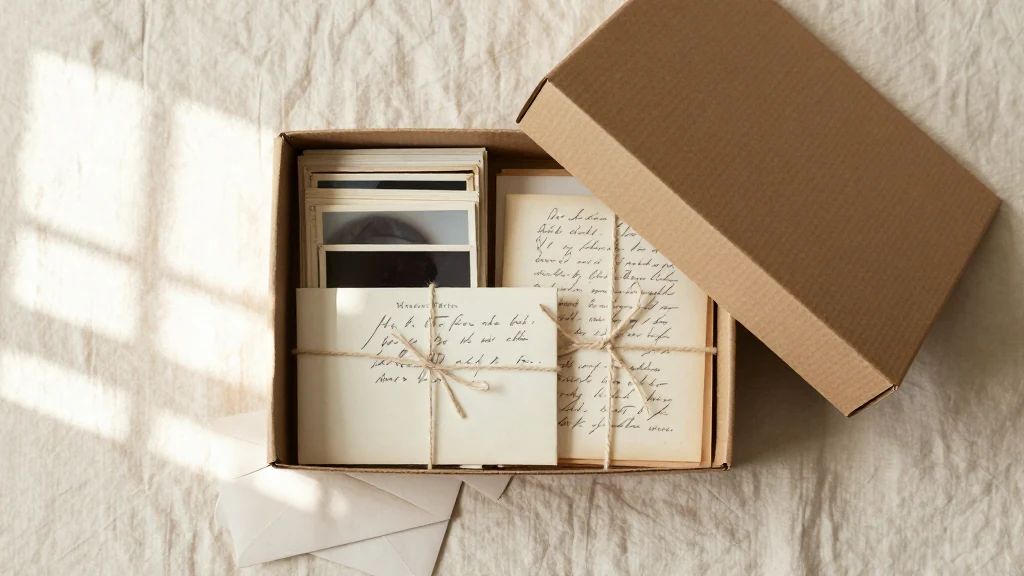
Most of us assume we have more than we do.
There are photographs, certainly. A few videos on an old phone. Some stories you have heard so many times you could repeat them yourself. It feels like enough.
Then something small happens. Someone asks how your grandmother and grandfather actually met, and you realize you know the short version but not the real one. Or you go looking for a recording of your dad's voice, just his ordinary speaking voice, and you cannot find a single one that is not shouted across a room at a birthday party.
That gap is common, and it is rarely anyone's fault. Nobody sits down and decides not to preserve a family's story. It just never becomes this week's job.
Four things worth checking
When we look at what families actually have saved, it tends to fall into four buckets. They are worth thinking about separately, because most families are strong in one and thin in another.
Their stories. Not the highlights everyone can recite. The particular ones: what their first job was really like, what they worried about at thirty, the decisions they would make differently. Ask yourself whether these exist anywhere outside someone's memory.
Their voice. How they actually sound. The pauses, the phrases they always use, the way they laugh mid sentence. Photographs preserve a face. Almost nothing in an ordinary family archive preserves a voice, and it is usually the first thing people wish they had.
Photos and keepsakes, with their context. A shoebox of unlabelled photographs is not preserved. It is postponed. The picture matters far less than knowing who is in it, when it was taken, and why anyone kept it.
Family knowledge. Names, dates, places, and how people connect. The things one person in every family happens to know, and which quietly disappear when they do.
A more careful way to look
You can go through those four in your head and get a rough sense of where you stand. The check walks the same ground properly, one question at a time.
You think of one living person, a parent, a grandparent, a partner, or another adult you love, and answer questions about what already exists. At the end you get a private guide showing where their story is already well preserved, which of the four areas has the biggest gap, and three specific next steps you can take, in order.
The next steps are ordinary and practical. Record one conversation. Label one box of photographs. Put a copy somewhere safe. They are things you can do yourself, this month, without buying anything.
What it is not
It is not a test, and there is no passing score. A low result does not mean your family has been careless or that you are running out of time. It means some things have not been written down yet, which is true of almost every family.
It is not a sales page in disguise either. The guide is genuinely useful on its own. If you never use Fablr, you should still finish with a clearer picture and a short list of things worth doing.
We ask for your email at the end so we can send you the guide as a private link you can come back to. Marketing emails are a separate, optional checkbox. You can skip it and still get your guide.
If you only do one thing
Record a conversation. Fifteen minutes is plenty. Ask something open, like what their twenties were actually like, and then stay quiet and let them talk.
You do not need equipment. The phone in your pocket is fine. The recording will not be polished, and that is not the point. In twenty years, nobody will wish it had better audio. They will just be glad it exists.